Introduction :-
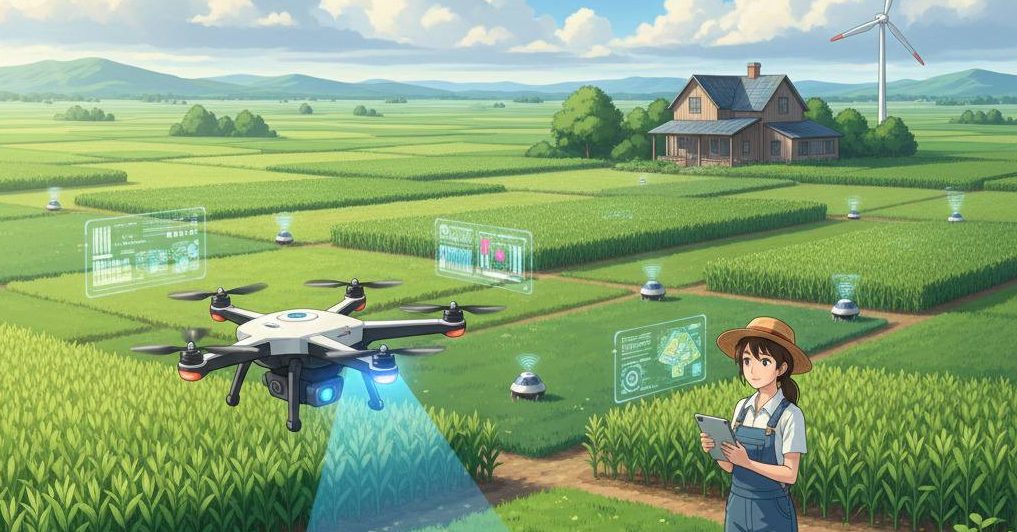
Drone farming is transforming modern agriculture by helping farmers monitor and manage crops with precision and efficiency. Using drones, farmers can observe large fields quickly, identify problem areas, and make informed decisions without walking through every acre. This technology is especially useful for detecting pest infestations, nutrient deficiencies, or water stress early, reducing crop losses and increasing productivity. Drones can also assist in spraying fertilizers and pesticides evenly, saving time and reducing labor costs. By integrating drone technology into farming practices, farmers can optimize resources, improve crop health, and enhance yield quality. Drone farming is a practical, cost-effective, and sustainable solution for modern agriculture challenges worldwide.
🌾 Drones allow farmers to survey fields quickly, providing real-time information about crop health and growth patterns.
💧 They help identify areas with water stress or irrigation issues, allowing precise water management.
🌿 Drone imagery can detect pest infestations or nutrient deficiencies early, preventing major crop losses.
🌞 Spraying fertilizers and pesticides using drones saves labor and ensures even application across large fields.
🌱 Drones also support mapping and planning for planting, harvesting, and resource allocation, improving farm efficiency.
Below are some key aspects of drone farming that farmers can implement to improve productivity, reduce losses, and enhance sustainability.
🔵 1️⃣ Field Monitoring and Mapping
Drones provide accurate, real-time monitoring of crops and fields, offering farmers a detailed overview of their land. High-resolution images and multispectral cameras allow farmers to assess plant health, detect stress, and map variations across fields. This information helps in identifying areas that require attention, such as nutrient supplementation, pest control, or irrigation adjustment. Field mapping also supports precision farming, enabling better planning for planting patterns, crop rotation, and resource allocation. By reducing the need for manual field inspection, drones save time, labor, and energy while ensuring that farmers can respond quickly to emerging problems, ultimately increasing overall productivity.
🔵 2️⃣ Precision Irrigation Management
Drones play a crucial role in optimizing water use in agriculture. By using thermal or multispectral imaging, drones can identify areas experiencing water stress or uneven irrigation. Farmers can then adjust irrigation systems to supply water only where it is needed, conserving this vital resource. Efficient water management not only reduces waste but also ensures healthier crops and higher yields. In regions facing water scarcity or irregular rainfall, drone-assisted irrigation monitoring helps farmers maintain crop productivity. Regular aerial surveys provide insights into soil moisture distribution and irrigation efficiency, enabling timely interventions and sustainable water usage across large agricultural areas.
🔵 3️⃣ Early Pest and Disease Detection
One of the major benefits of drone farming is early detection of pests and diseases. Drones equipped with advanced cameras can capture detailed images that reveal early signs of infestations or infections before they become severe. Farmers receive timely alerts and can apply targeted treatments, reducing chemical use and preventing crop losses. Early intervention also minimizes the risk of widespread damage and ensures consistent crop quality. With drones, pest and disease management becomes more efficient and cost-effective, allowing farmers to maintain healthy plants, improve yield, and reduce environmental impact through precise application of pesticides and fertilizers.
🔵 4️⃣ Aerial Spraying and Fertilization
Drones can perform aerial spraying of water, fertilizers, or pesticides, ensuring even coverage and reducing manual labor. These drones are especially useful in large or uneven fields where traditional spraying methods are challenging. Controlled spraying minimizes waste, prevents overuse of chemicals, and targets only the areas that need treatment. Drone-assisted fertilization also improves nutrient efficiency, leading to healthier crops and better yields. By automating these tasks, farmers save time, reduce labor costs, and enhance precision in crop management. This technology supports sustainable farming by reducing chemical runoff and environmental contamination while maintaining high productivity.
🔵 5️⃣ Data Collection and Decision Support
Drones collect valuable data that helps farmers make informed decisions about crop management. Images, videos, and sensor data can be analyzed to assess crop growth, soil health, and resource usage. This information allows farmers to optimize planting schedules, manage inputs efficiently, and forecast yields accurately. By integrating drone-collected data with farm management software, farmers can track performance over time and implement best practices. Data-driven decision-making enhances productivity, reduces costs, and minimizes environmental impact. Drone technology transforms traditional farming into a smart, precise, and sustainable system that maximizes both efficiency and profitability.
🌾 Conclusion
Drone farming is revolutionizing agriculture by providing farmers with efficient tools for monitoring, managing, and improving crop production. By using drones for field mapping, irrigation management, early pest detection, aerial spraying, and data collection, farmers can save time, reduce costs, and enhance yields. This technology also promotes sustainable practices by optimizing resource use and minimizing environmental impact. Integrating drones into farming allows modern agriculture to be more precise, productive, and resilient against challenges like pests, diseases, and climate variability. With proper planning and management, drone farming offers a practical solution for sustainable, high-efficiency agriculture worldwide.