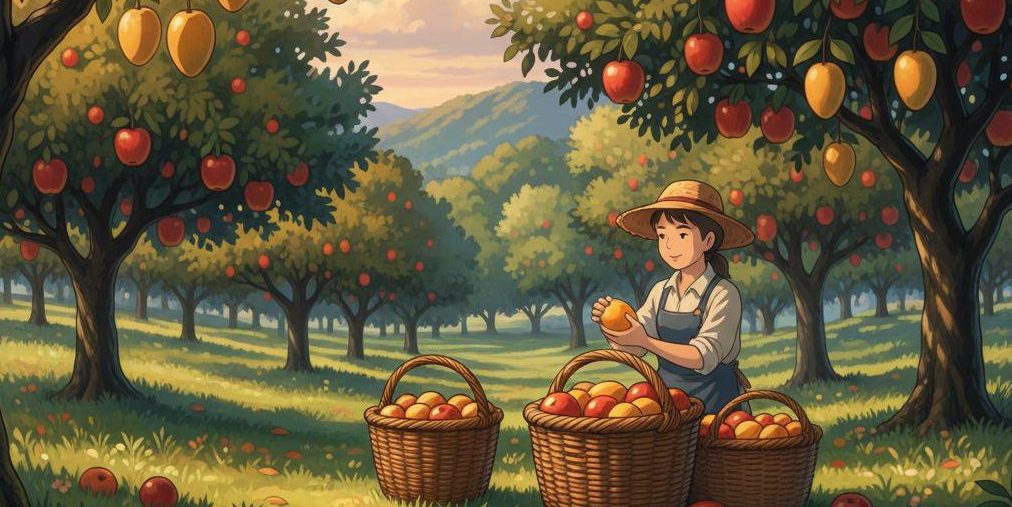
🍎 Fruit Farming: A Complete Guide for Farmers 🍎
Fruit farming is an important agricultural practice that provides nutritious food and income for millions of people worldwide. It involves cultivating a wide variety of fruits such as apples, mangoes, bananas, citrus, and berries under suitable soil, climate, and irrigation conditions. Successful fruit farming requires careful planning, proper soil management, selection of high-quality saplings, pruning, irrigation, and pest control to achieve high yield and premium-quality produce. Farmers must also consider seasonal variations, market demand, and sustainable practices to ensure profitability and environmental balance. With modern techniques and proper management, fruit farming can be both productive and sustainable, supporting food security and improving rural livelihoods. Understanding the essentials of fruit cultivation helps farmers make informed decisions and maximize output efficiently.
🍎 Soil preparation is vital for healthy fruit crops. Proper plowing, leveling, and addition of organic matter improve fertility and drainage, promoting strong root development.
🍎 Selecting high-quality saplings ensures strong growth. Farmers should choose disease-resistant and locally adapted varieties for better yield and longevity of trees.
🍎 Irrigation management is essential for fruit farming. Providing adequate water without overwatering ensures strong plant growth, flowering, and fruit development.
🍎 Pest and disease control protects fruit crops. Regular monitoring, integrated pest management, and timely treatment prevent major losses and maintain tree health.
🍎 Harvesting and post-harvest care improve quality and market value. Proper picking, handling, and storage reduce spoilage and increase profitability.
Below are the key points for successful fruit farming practices:
🔵 1️⃣ Soil Preparation and Fertility Management
Healthy soil is the foundation of productive fruit farming. Farmers should plow the land thoroughly and level it to ensure proper drainage and root establishment. Adding organic matter such as compost, farmyard manure, or green manure improves soil fertility, structure, and moisture retention. Conducting soil tests helps determine nutrient deficiencies, allowing precise fertilizer application for optimal growth. Mulching around trees conserves moisture, suppresses weeds, and maintains soil temperature. Crop rotation with nitrogen-fixing plants can naturally enhance soil fertility. Proper soil management ensures strong root systems, better tree growth, and higher fruit yield throughout the season.
🔵 2️⃣ Selection of Quality Saplings and Planting Techniques
Choosing high-quality, disease-free saplings is critical for successful fruit farming. Farmers should select varieties suited to local soil, climate, and market demand. Planting depth, spacing, and orientation must be carefully managed to allow proper growth, sunlight exposure, and airflow. Techniques such as pit preparation, filling with enriched soil, and proper watering during planting improve establishment success. Grafting high-yield or disease-resistant varieties onto rootstocks can improve productivity and tree resilience. Correct planting methods and quality saplings ensure uniform growth, early fruiting, and long-term orchard sustainability.
🔵 3️⃣ Irrigation and Water Management
Efficient water management is vital in fruit farming, as both under-watering and overwatering can reduce yield. Drip irrigation and micro-sprinklers deliver precise water to the root zone, improving efficiency and reducing wastage. Mulching and rainwater harvesting help conserve soil moisture and maintain consistent hydration. Watering should be adjusted according to tree age, season, and fruit development stage to optimize growth. Monitoring soil moisture and scheduling irrigation at critical growth stages, like flowering and fruit setting, ensures maximum fruit quality. Proper irrigation enhances nutrient uptake, reduces stress, and promotes consistent, high-quality harvests.
🔵 4️⃣ Pest and Disease Management
Fruit crops are vulnerable to pests like aphids, fruit flies, and mealybugs, as well as diseases such as blight, rust, and fungal infections. Early detection and regular monitoring are essential to prevent widespread damage. Integrated pest management (IPM) techniques, including natural predators, resistant varieties, crop rotation, and minimal chemical use, help maintain healthy trees. Removing infected parts, proper pruning, and maintaining orchard hygiene reduce disease spread. Timely and judicious application of pesticides, only when necessary, protects both the crops and the environment. Effective pest and disease management ensures better yield, improved fruit quality, and sustainable farming practices.
🔵 5️⃣ Harvesting and Post-Harvest Management
Timely harvesting is crucial to ensure fruit quality, taste, and marketability. Fruits should be picked at the right stage of maturity to maximize nutritional value and shelf life. Proper handling during harvesting prevents bruising and damage. Post-harvest practices such as cleaning, grading, sorting, and storing in cool, ventilated conditions maintain freshness and reduce spoilage. Packaging and transportation in suitable containers ensure fruits reach markets in optimal condition. Implementing good post-harvest management increases profitability, maintains quality standards, and supports sustainable fruit farming practices over multiple seasons.
Conclusion
Fruit farming is a rewarding agricultural practice that requires careful attention to soil preparation, quality saplings, irrigation, and pest control. By adopting modern and sustainable techniques, farmers can achieve higher productivity, superior fruit quality, and increased profitability. Proper harvesting and post-harvest management further enhance market value and reduce losses. Sustainable fruit cultivation supports food security, rural livelihoods, and optimal use of natural resources. Farmers who implement these practical strategies can enjoy consistent yields, healthy orchards, and long-term success in fruit farming.