🌾 Introduction
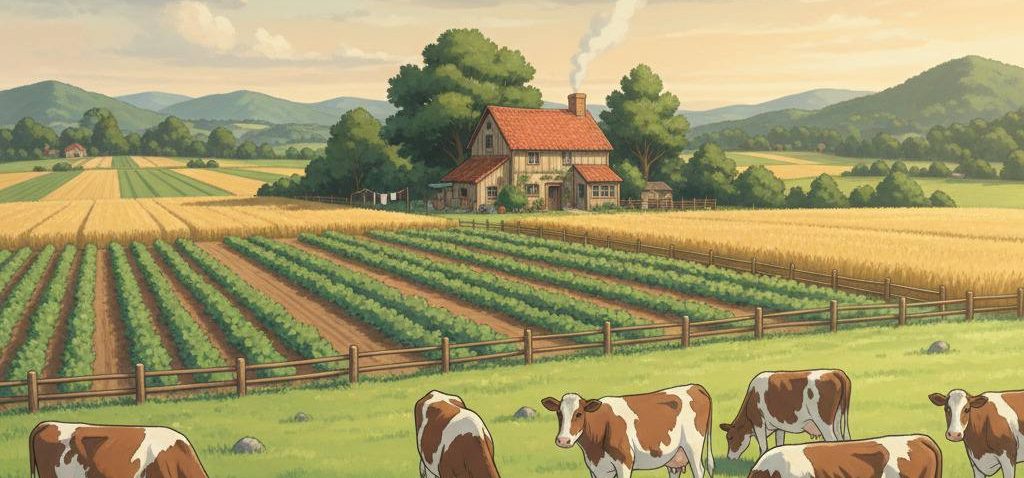
Mixed farming is an agricultural system where crop production and animal husbandry are practiced together on the same farm. This method has been used for centuries and is still popular among farmers worldwide because it offers balance, stability, and better use of farm resources. In mixed farming, crops provide food and fodder for animals, while animals supply manure that improves soil fertility. This natural connection helps farmers reduce waste and lower production costs. Mixed farming is suitable for small, medium, and large farms because it spreads risk and ensures income from more than one source. If crop prices fall, livestock can support the farmer, and if animal production faces problems, crops help maintain income. This system is beginner-friendly and works well in many climates, making it a reliable choice for long-term and sustainable agriculture.
🌾 Mixed farming allows farmers to grow crops and raise animals together, which creates a natural cycle of nutrients on the farm. Crops feed animals, and animal waste enriches the soil.
🌾 This farming system helps farmers use land, labor, and resources more efficiently. Nothing goes to waste, and every part of the farm supports another activity.
🌾 Mixed farming reduces the risk of total crop failure or income loss. If one activity suffers, the other can still provide food and income.
🌾 Farmers practicing mixed farming often enjoy better soil health because animal manure improves soil structure and fertility naturally.
🌾 This method supports food security by producing grains, vegetables, milk, meat, and eggs from the same farm.
🌾 Below are the key points that explain mixed farming in detail. These points cover its methods, advantages, challenges, and best practices to help farmers understand how to manage this system successfully.
🔵 1️⃣ Farm Structure and Planning in Mixed Farming
🌾 Proper planning is the foundation of successful mixed farming. Farmers must carefully decide how much land to allocate to crops and how much to livestock. Crop selection should match animal needs so that fodder crops like maize, grasses, and legumes are available throughout the year. Animal shelters should be built close to crop fields to reduce labor and transport costs. Water sources must be accessible to both crops and animals. Rotating crops and animals across different fields helps maintain soil fertility and control pests. Good planning also includes storing animal feed and managing manure properly. When the farm is well organized, mixed farming becomes efficient, productive, and easier to manage for farmers of all experience levels.
🔵 2️⃣ Benefits of Mixed Farming for Income and Risk Management
🌾 One of the biggest advantages of mixed farming is income stability. Farmers earn from both crop sales and livestock products such as milk, eggs, meat, or wool. This reduces dependence on a single source of income. Market price changes affect farmers less because losses in one area can be balanced by gains in another. Mixed farming also creates year-round work opportunities for family labor, reducing unemployment during off-seasons. By producing animal feed on the farm, farmers lower input costs and increase profit margins. This system is especially helpful for small farmers who need reliable income and cannot afford high risks associated with single-crop farming.
🔵 3️⃣ Soil Fertility and Environmental Advantages
🌾 Mixed farming supports healthy soil and a balanced environment. Animal manure adds organic matter to the soil, improving water retention and nutrient availability. This reduces the need for chemical fertilizers and lowers production costs. Crop residues can be fed to animals instead of being burned, which reduces air pollution. Crop rotation with legumes improves nitrogen levels in the soil naturally. Mixed farming also supports biodiversity by creating different habitats for plants and animals. These practices protect the environment while maintaining good crop yields. Farmers who care for soil health through mixed farming often see better long-term productivity and reduced land degradation.
🔵 4️⃣ Challenges Faced in Mixed Farming Systems
🌾 Despite its benefits, mixed farming also has challenges. Managing both crops and animals requires more skills, time, and planning. Farmers must understand animal health, feeding, breeding, and disease control along with crop management. Initial investment can be higher because farmers need infrastructure for livestock, such as sheds and fencing. Poor management can lead to overgrazing, soil compaction, or disease spread. Weather conditions may also affect both crops and animals at the same time. However, with proper training, planning, and gradual expansion, these challenges can be controlled, making mixed farming a rewarding system in the long run.
🔵 5️⃣ Best Practices for Successful Mixed Farming
🌾 To succeed in mixed farming, farmers should focus on balance and efficiency. Selecting suitable crop and animal combinations based on climate and soil is essential. Regular soil testing helps maintain fertility levels. Proper animal nutrition and health care increase productivity and reduce losses. Efficient manure management improves soil quality and keeps the farm clean. Farmers should also keep records of crop yields and animal production to track performance and make improvements. Learning from local agricultural experts and adopting improved practices gradually can increase success. When managed well, mixed farming becomes a sustainable and profitable system for future generations.
🌾 Conclusion
Mixed farming is a practical and time-tested agricultural system that combines the strengths of crop production and livestock rearing. It helps farmers use resources wisely, improve soil health, and secure stable income from multiple sources. By recycling nutrients naturally, mixed farming supports environmental protection and long-term productivity. Although it requires careful planning and good management skills, the benefits outweigh the challenges for most farmers. This system is suitable for different regions and farm sizes, making it a flexible choice worldwide. Farmers who adopt mixed farming with proper knowledge and sustainable practices can achieve better food security, economic stability, and environmental balance for the future.