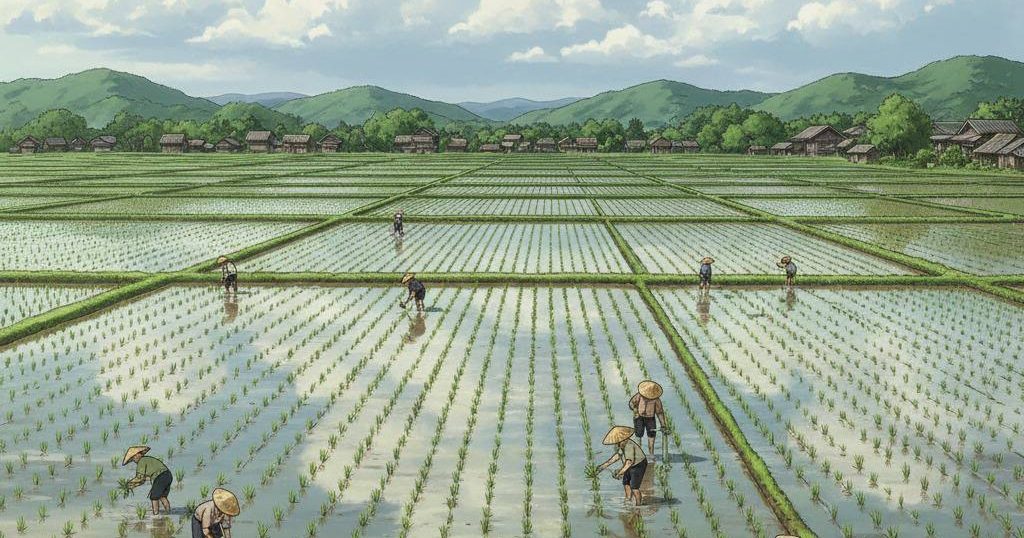
Rice farming is one of the most important agricultural practices worldwide, serving as a staple food for billions of people. It involves cultivating rice, a water-intensive cereal crop, in suitable soil and climate conditions to achieve optimal yield and quality grains. Successful rice farming requires careful planning, proper land preparation, seed selection, irrigation management, and pest control. Farmers must understand seasonal variations, rainfall patterns, and local soil conditions to ensure healthy crop growth. Modern practices and sustainable methods can make rice farming both profitable and environmentally friendly. By adopting efficient cultivation techniques, farmers can improve productivity, reduce losses, and maintain soil health, ensuring long-term food security and economic stability in rice-growing regions.
🌾 Land preparation is the first step in rice farming. Proper plowing, leveling, and puddling help retain water and improve soil structure, creating ideal conditions for rice seedlings to grow.
🌾 Choosing high-quality rice seeds is essential for a successful crop. Farmers should select varieties suited to local climate, soil type, and resistance to pests and diseases.
🌾 Sowing method and timing affect rice productivity. Transplanting seedlings or direct seeding must be done according to the season and water availability to ensure healthy growth.
🌾 Efficient water management is critical for rice farming. Maintaining appropriate water levels in the fields prevents stress, promotes nutrient uptake, and supports strong plant development.
🌾 Pest and disease control safeguards rice yields. Regular monitoring, integrated pest management, and timely treatment help prevent major losses and maintain crop health.
Below are the key points for successful rice farming practices:
🔵 1️⃣ Soil Preparation and Fertility Management
Soil quality is the foundation of productive rice farming. Farmers should plow the land thoroughly and level it to ensure uniform water distribution. Puddling the soil reduces water percolation and supports seedling establishment. Adding organic matter such as compost or farmyard manure improves soil fertility, texture, and moisture retention. Conducting soil tests helps determine nutrient deficiencies, allowing precise application of fertilizers. Crop rotation with legumes can replenish nitrogen levels naturally and prevent soil-borne diseases. Proper soil preparation ensures that rice plants develop strong roots, grow uniformly, and produce higher yields, making the cultivation process more efficient and sustainable.
🔵 2️⃣ Seed Selection and Sowing Techniques
Choosing high-quality, certified rice seeds is crucial for achieving optimal growth and yield. Farmers should select varieties suitable for their local climate, soil, and water availability. Short-duration varieties are ideal in regions with unpredictable rainfall, while high-yield varieties perform best under favorable conditions. Seed treatment with fungicides or biofertilizers protects seedlings from early diseases and enhances germination. Transplanting healthy seedlings at the right spacing ensures even plant growth and reduces competition. Direct seeding methods require careful seed depth and water management. Proper seed selection and sowing techniques improve plant health, root development, and overall productivity.
🔵 3️⃣ Irrigation and Water Management
Water management is critical in rice farming due to the crop’s high water requirements. Maintaining the correct water level in fields during different growth stages ensures proper nutrient uptake and reduces stress on plants. Farmers can use methods such as controlled flooding, alternate wetting and drying, or drip irrigation in areas with limited water resources. Rainwater harvesting and proper field bunding help conserve water and reduce dependency on external sources. Monitoring soil moisture regularly allows farmers to adjust irrigation according to crop needs. Efficient water management supports strong plant growth, reduces disease risk, and maximizes rice yields sustainably.
🔵 4️⃣ Pest and Disease Management
Rice crops are vulnerable to pests like stem borers, leafhoppers, and diseases such as blast and bacterial leaf blight. Early detection and regular monitoring are essential to prevent major damage. Integrated pest management (IPM) practices, including crop rotation, resistant varieties, natural predators, and minimal chemical use, maintain healthy crops. Field sanitation, removal of infected plants, and proper water management help control disease spread. Timely intervention and careful application of pesticides only when necessary reduce environmental impact. Effective pest and disease management ensures higher yield, better grain quality, and sustainable rice farming practices.
🔵 5️⃣ Harvesting and Post-Harvest Management
Timely harvesting is vital to preserve rice quality and prevent losses. Rice should be harvested when grains are fully mature and moisture content is optimal to avoid spoilage. Using appropriate harvesting equipment minimizes crop damage and increases efficiency. Post-harvest drying, either under shade or using solar dryers, reduces grain moisture and prevents mold growth. Proper storage in moisture-proof containers or silos ensures long-term preservation and maintains seed quality for the next season. Farmers can also practice grading and sorting to enhance market value. Good post-harvest management maximizes profits and sustains rice farming for future seasons.
Conclusion
Rice farming is a vital agricultural practice that demands careful attention to soil preparation, seed selection, water management, and pest control. By adopting modern and sustainable techniques, farmers can achieve higher productivity, improved grain quality, and reduced environmental impact. Efficient cultivation practices support long-term food security and provide reliable income for farming communities. Sustainable rice farming ensures optimal use of natural resources while maintaining soil health and crop resilience. Farmers who implement these smart methods can maximize yield, preserve the environment, and contribute to a stable and productive agricultural system.