Introduction
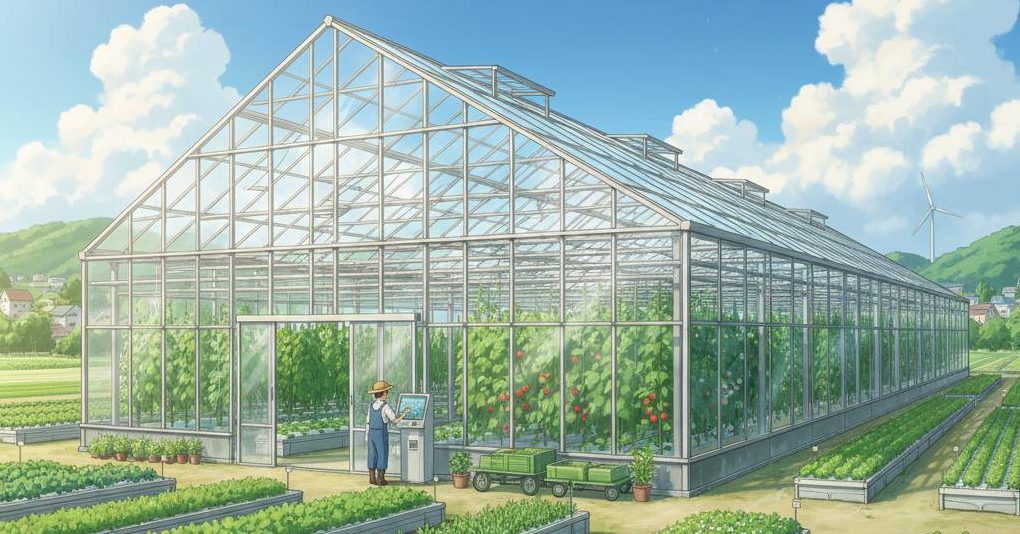
Artificial Intelligence (AI) is revolutionizing agriculture by helping farmers grow crops more efficiently and sustainably. Modern farms face challenges like unpredictable weather, pests, soil degradation, and increasing food demand. AI offers solutions through smart tools, data analysis, and automated systems that optimize farming practices. With AI, farmers can monitor crop health, predict yields, manage resources, and detect diseases early. AI also helps in precision farming, where inputs like water, fertilizer, and pesticides are applied exactly where needed, reducing waste and costs. By combining traditional knowledge with advanced AI technologies, farmers can achieve higher productivity, better crop quality, and sustainable practices that protect the environment and resources for the future.
🌾 AI helps farmers monitor crops using sensors and cameras to detect early signs of stress or disease.
💧 AI systems optimize irrigation by analyzing soil moisture and weather patterns, saving water and energy.
🌿 Pest and disease prediction tools guide farmers to take preventive action, reducing losses.
🌞 AI-assisted machinery can perform planting, harvesting, and fertilization with high precision and efficiency.
🌱 Data analysis from AI helps farmers make informed decisions about crop rotation, yield forecasting, and resource management.
Below are some key aspects of AI in agriculture that can help farmers improve productivity, reduce waste, and ensure sustainable farming practices.
🔵 1️⃣ Precision Farming with AI
AI enables precision farming, which uses data and technology to manage crops at a very detailed level. Sensors, drones, and satellite imagery collect information about soil health, water levels, and crop growth. AI analyzes this data to guide irrigation, fertilization, and pesticide application accurately. By applying inputs only where and when they are needed, farmers reduce waste, save money, and minimize environmental impact. Precision farming also helps identify areas of the field that need attention, allowing early intervention. This results in healthier plants, higher yields, and better resource management. Precision farming powered by AI makes agriculture more efficient, profitable, and sustainable.
🔵 2️⃣ AI-Powered Pest and Disease Management
AI can predict pest infestations and disease outbreaks before they become severe. Machine learning algorithms analyze images from drones, sensors, or cameras to detect early signs of crop stress or infection. Farmers receive timely alerts and can take preventive measures such as targeted spraying or biological controls. This reduces crop losses and lowers the use of chemical pesticides, protecting both the environment and human health. AI also learns patterns over time, improving predictions with each growing season. By integrating AI into pest and disease management, farmers can maintain healthier crops, improve yield quality, and reduce financial risks associated with unexpected outbreaks.
🔵 3️⃣ Optimized Irrigation and Water Management
Water is a critical resource for agriculture, and AI helps manage it efficiently. AI systems monitor soil moisture, weather forecasts, and crop requirements to automate irrigation schedules. This ensures plants receive the right amount of water without waste. Smart irrigation reduces energy consumption, prevents waterlogging, and maintains optimal soil health. AI also identifies areas in the field that are dry or stressed, allowing targeted watering. Efficient water management not only conserves this vital resource but also improves crop growth and yield. By using AI-driven irrigation, farmers can adapt to changing climate conditions and maximize productivity sustainably.
🔵 4️⃣ Yield Prediction and Crop Planning
AI uses historical data, weather information, and real-time crop monitoring to predict yields accurately. These insights help farmers plan planting schedules, manage inventory, and make market decisions. Accurate yield forecasting reduces financial uncertainty and ensures optimal use of resources. Farmers can also choose suitable crop varieties based on expected climate conditions and soil health. AI-assisted crop planning minimizes risks from unexpected weather events or pests. By combining predictive analytics with practical farming strategies, farmers can enhance production efficiency, increase profitability, and maintain food security while optimizing labor and input management.
🔵 5️⃣ Automated Farming and Robotics
AI-powered machines and robots are transforming farming tasks like planting, weeding, harvesting, and fertilizing. These machines use sensors and AI algorithms to navigate fields accurately, reducing labor costs and increasing efficiency. Robots can operate for long hours, maintain consistency, and handle delicate crops without damage. Automated systems also integrate with AI platforms to collect real-time data and make adjustments on the go. This technology improves productivity, reduces human errors, and allows farmers to manage larger areas with fewer resources. AI-driven automation is a practical solution for modern farming challenges, ensuring higher yields and consistent crop quality.
🌾 Conclusion
AI in agriculture offers practical solutions to modern farming challenges, helping farmers grow more with fewer resources. By enabling precision farming, predictive pest and disease management, optimized irrigation, yield forecasting, and automation, AI improves efficiency, sustainability, and profitability. Farmers can make informed decisions, reduce costs, and minimize environmental impact while producing healthier and higher-quality crops. Adopting AI technologies ensures resilient and modern agricultural practices that meet the demands of growing populations and changing climates. Integrating AI with traditional knowledge creates a smarter, more productive, and sustainable farming future for communities worldwide.